Real, Rocky, and Resistant Relationships
Lesson Summary – September 17, 2026
Have you ever considered how you treat Jesus? That was the question. Relationships are living entities. They move forward and backward. They die and can be reborn. They evolve and decay. They can be locked by their limitations or transformed beyond them. There are many, many characteristics that go into a good and real relationship, and one important characteristic is that every relationship takes, at least, 2 people.
God is not satisfied with just saving us and delivering us from eternal separation and punishment. He is interested in far more than that. Certainly, our salvation is a big part of God’s plan, but He is interested in an intimate relationship with each and every person. The intimacy that God wants from us, and in fact offers to us, is found throughout the Bible.
We must remember that God is the holy, perfect, creator. He cannot be associated with sin in anyway. This is His standard, and it will not be comprised. So, how can we, a sinful people, ever have an intimate relationship with a holy God (Colossians 1:15-23). He actually made the first move and did three things to make it possible.
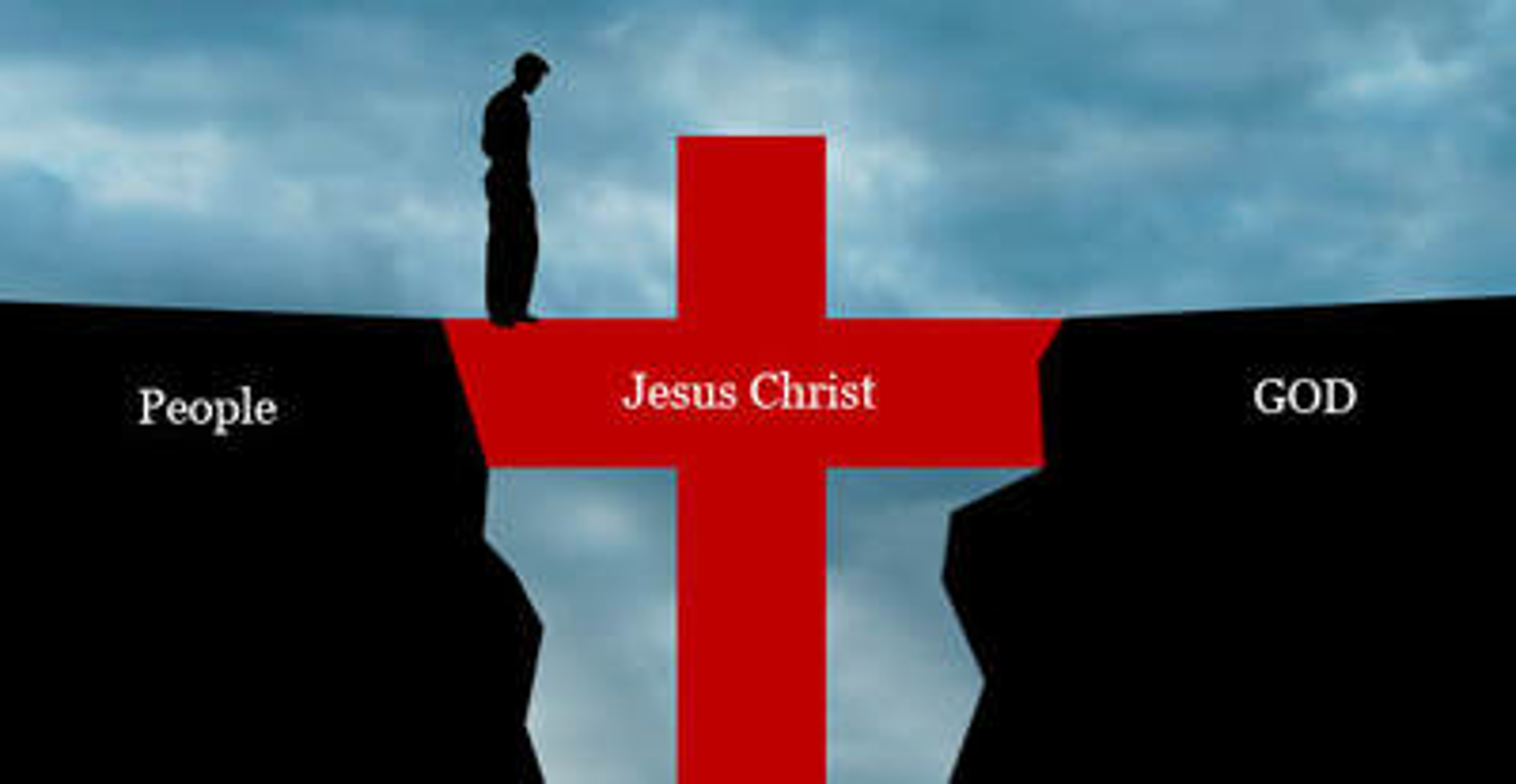
1. Cross - God came down to us in the person of Jesus Christ. The sin of the world, the punishment of death for every single human being past, present, and future was placed on Him. The moment that Jesus died the sin barrier between God and mankind was no more. Jesus made it possible not only to be acceptable and righteous in God’s eyes, but to be able to have a relationship with Him.
2. New Birth - When a person accepts Jesus and their Savior and Lord, not only are they are given a new spiritual life, and the promise of living eternally with Jesus, but they are also clothed in the robe of His righteousness (Isaiah 61:10). This means that God sees us as pure, unblemished, clean, holy. Of course, we still sin, but the gift of righteousness, that puts us in a “right” standing with God is never removed. 1 John 2:1 says we have an advocate with the Father, and He is, Jesus Christ, the righteous One. (Hebrews 7:25) Jesus intercedes for us. We are covered, washed clean, and righteous, in the eyes of the Holy God. It has nothing to do with our behavior or anything we do, but everything to do with what Jesus did.
3. Holy Spirit - God sent the Holy Spirit to take up residence in us. Through the gift of the Holy Spirit, God renews us, and produces in our hearts feelings, hopes, and desires which are evidence that we belong to Him. The Holy Spirit guides us and convicts us to be more like Jesus. Ephesians 1:13 says “we are sealed with the Holy Spirit…”
Since it takes two for a relationship, our response to how God has intentionally pursued us must be 3 actions.
1. Enter into it - We must say “yes” to enter into it…..whole-heartedly, not half-way. A person must recognize the condition of sin that rules their life; acknowledge Jesus is who the Bible says He is; repent of their sin (repentance is actually a change in behavior not just an “I’m sorry”); receive Jesus as their Savior Redeemer, and surrender to Him as Lord of their life. This is a must.
2. Pursue the relationship - Just like any relationship one must spend time to get to know another person. It is no different with Jesus/God. We can know Him by reading His word consistently, praying consistently. When we pray it is important to allow time for Him to speak. Listen for Him. Watch for Him in your daily life. He wants intimacy from us, and in order to do that we must…a) Be honest with Him. We must continue to confess our sins, and agree with Him about the truth of our sin… b) Trust who He is. It doesn’t mean we never question, but we must trust His faithfulness and love for us, and be anchored in it….c) Be vulnerable before Him. We are to open our hearts to Him. He already knows anyway, but to say them, to offer them breaks down the wall we put up before Him. It allows us to hear Him.
3. Pass it on - We are to tell others what Jesus has done in our lives. We are to be a testimony for who He is. If you love someone, you talk about them. Think of how much you talk about your loved ones. How much do you talk about Jesus?

Words and Music
LESSON SUMMARY – SEPTEMBER 10, 2026
WORDS AND MUSIC
David reminds us in Psalm 100: “Make a joyful noise unto the Lord, all ye lands.” He expands on the importance of music in worship later in chapter 149:1 and chapter 150: 1-6.
Music came into my life at an early age (7) when I started playing trumpet; in fact, the very first song I ever learned to play was the great hymn “Abide with Me.” As I said, I sometimes regret that I didn’t pursue music as a career because no other art form fills my emotions as much as music, and that is especially true with the music of worship. Whether it is good old hymns, contemporary Christian music, or toe-tapping Gospel Quartet songs, our souls are stirred each time we hear them. No less a musical authority than Johann Sebastian Bach once said: “All music should have no other end and aim than the glory of God and the souls’ refreshment.” Certainly, glorifying God through music provides satisfaction to the soul. I alluded to one of my favorite movies, EDDIE AND THE CRUISERS (I hope you have watched it) where the lead character says: “Words without music or music without words is good, but when you put them together, well, that’s something special.”
Songs with a straight forward Christian theme have become hits on the Pop Charts over the years: “Oh, Happy Day”, “Spirit in the Sky” and “Put Your Hand in the Hand” to name a few. But there have been other hits whose message has been a bit more subtle. I, once again, encourage you to look up the lyrics of these three songs or listen to them in their entirety and instead of thinking of them as love songs between a man and a woman, hear how they are actually love songs to God:
Ø “Sunny” by Bobby Hebb, written to a God who had helped him get through a personal tragedy by shining His radiant love on him.
Ø “You Needed Me” by Anne Murray. The writer of the song calls it “a song about God’s unconditional love for us and our gift of undeserved love from Him.”
Ø “What a Difference You Made in My Life” sung by Ronny Milsap and co-written with Archie Jordan who calls it “an inspirational song about what happens when God comes into our lives.”
Each of these songs talks about the relationship the writer and singer had developed with God and why it was important in their lives. God wants a relationship with us as much as we want a relationship with Him and the best ways to enhance that relationship is through prayer, taking time to really talk to God and, even more importantly, listen to what he is saying to us. And Bible study also builds that relationship by getting to know our Lord even better. And without a doubt, worship music strengthens that relationship as well.
I closed the lesson with a final example of a song from the Bill and Gloria Gaither musical, Alleluia! titled God Gave the Song. In a beautiful narration in the middle of the song, the narrator says:
God gave the song, it’s always been with us
It is a simple, lovely song for everyman that came to us through a manger in Bethlehem
At first, some tried to ignore the song-they said, “There is no song. It simply doesn’t exist.” Others tried to change the song; they made laws in an effort to stop the song. They tried to drown it out. They refused to allow anyone to sing the song and even killed some who sang it. Armies marched against it.
Finally, they nailed that song to a tree and smugly said to themselves, “There! That should take care of that!”
But it didn’t… because three days later that song rose from the depths of an empty tomb and sings in each of our hearts today.
You ask me how I keep on singing
Why I can sing when things go wrong.
Well, since I found the source of music
I just can’t help it
God Gave the Song
Joshua 10
Last week our lesson focused on Joshua 10, but you can’t focus on Joshua 10 without reading Joshua 9. Joshua 9 tells about a pagan people called the Gibeonites, who occupied land in Canaan. These people had heard of these dessert people called “Israelites” and how they were conquering and destroying cities in Canaan. They had also heard that the Israelites had a great and powerful God. The Gibeonites were fearful that they would also be destroyed, so they came up with a ruse to make a treaty with the Israelites. It is clear in reading Joshua 9 that the Gibeonites knew quite a bit about the mission of the Israelite people. They knew how God had freed the Israelites from Egypt. They knew Israel was intent on conquering Canaan, and could not make a treaty with any people occupying the land. If you haven’t read Joshua 9, go back and read the elaborate scheme the Gibeonites came up with to save themselves. It is quite brilliant.
Joshua and the leaders of Israel fell for the trickery of the Gibeonites, and made a peace treaty with them by swearing an oath to the Lord. The Bible tells us Joshua and the leaders did this “without inquiring of the Lord.” So, basically a big decision was made, and the leaders did not pray and ask for God’s guidance. Big mistake.
After Joshua and the Israelites learned of the Gibeonites deceit, they, of course, were not pleased with the Gibeonites and made them servants of the Temple for the rest of their days. However, the Gibeonites were also under their protection, whether the Israelites liked it or not.
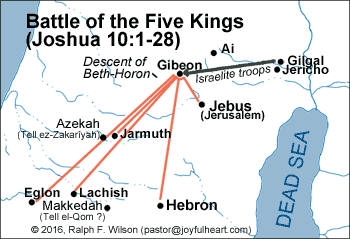
This brings us to Chapter 10, which was really the heart of the lesson last week. In Chapter 10, five kings of the cities in the hill country of Canaan got very upset that the Gibeonites had made a treaty with these dessert people taking over the land. So these kings formed a coalition and went and attacked the city of Gibeon. The Gibeonites then appealed to the Israelites to come and save them. Because the Israelites had sworn an oath to the Lord, they did indeed come to the rescue of their servants in Gibeon.
This was not an easy battle for Israel because of their proximity to Gibeon. Israel was camped at a town called Gilgal. It was located about 20-25 miles away from Gibeon, and due to the topography of the land, the route to get to Gibeon was all uphill. The scripture says, Joshua and his entire army marched all night long to get to the battle. This is where our lesson focused. By all accounts Israel found themselves in an uphill battle that could have been avoided if they had only asked God for His guidance about making the treaty with the Gibeonites.
Have you ever found yourself in an uphill battle that could have been avoided? How do you handle really hard situations that are a blend of someone else’s fault and your own?
2 things to watch out for….
1. Can you keep from falling into self-condemnation?
It is so easy to say “if I only I had done this or that. If only I had not gotten involved with him/her. If only I had hung up. If only I had said no or yes.” There are so many “if only(s),” right? The truth is we do make mistakes, and life is hard enough without you piling doom on yourself. That is what self-condemnation is dooming yourself. We do need to accept responsibility, and repent sometimes, but remember our Lord is forgiving, and loving. Self-condemnation is never from Him.
2. Can you keep from spending energy on blame?
Blame and resentment are blinding, and suck the energy out of you. We are called to forgive. If we carry unforgiveness in our hearts, there is no way the love of Christ can flow through us. It just cannot. If we spend our energy placing blame on someone else, ultimately, we do not have the energy to fight the actual battle before us, and we miss who the real enemy is. We do not have flesh and blood enemies, and we can lose sight of that.
In Joshua 10, the Lord tells Joshua not to be afraid that the Israelites will indeed win the battle. Do you see it? The Lord did not abandon Israel because they made an error in making the peace treaty. Israel had sworn an oath to God, and they were faithful to their word; God also was faithful to them.
In the actual battle, the Lord fought for Israel in 2 ways. He threw the enemies into confusion, and as they fled He hurled hailstones at them. More fell from the hail than were destroyed by the sword. Even though the Lord fought for Israel, Joshua still asked for more daylight for the battle. What was the reason for this? If the Lord has said “you’re going to win,” and He fights for you. Why did Israel have to fight? Why did they pursue them as they fled?
Israel had to fight because they had to know they could. It is through our fights that we become someone we never thought we could be. It is through our fights we do things we never thought we could do. It is how our faith grows and matures. Ultimately, we are all soldiers. Scripture tells us this in 1 Timothy. We are called to fight the good fight of faith. When God calls something forth from you that you did not know you had, you are going to shine the light of God’s glory, and that is what we are here to do.
A Swan’s Song
Summary of 2nd Timothy – A Swan’s Song
The book of 2nd Timothy is the Apostle Paul’s final letter, written from prison in Rome as he awaited execution in the Mamertine Prison. The Mamertine was a brutal existence for the venerable disciple, yet Paul held no grudge against the emperor Nero, his persecutors or the friends who had deserted him. In fact, he prayed for their mercy while accepting his fate and longing for the day he would receive his crown of righteousness in heaven.
Addressed to his young protégé Timothy, a pastor in Ephesus, the letter is deeply personal, urgent, and filled with both encouragement and solemn warning. It reflects Paul’s desire to pass on spiritual strength and faithful leadership to the next generation.
Although the letter was written to a minister of the Gospel, Paul’s words are relevant for all Christians on how to remain faithful despite our fears, suffering, challenges and the inevitable persecution that all Christians will face. Paul urges Timothy to “fan into flames” of the gift God has given him; likewise, we should do the same. Because true faith manifests in our works to be obedient to God, our faith then gives us the desire to act using the spiritual gift(s) God has given us.
God gives us the ability to reject our fears with the tools of power, love, and self-discipline. We are then able to stand against opposition and maintain control under difficult situations. God loves us with unconditional love (agape love) so He provides the strength to face what lies ahead.
Paul reminds Timothy not to be ashamed of the testimony of Christ, but to join in suffering for the gospel. Paul illustrates the discipline, endurance, and hard work required of a faithful servant of God. Timothy is called to remain focused and committed, keeping Christ at the center of his ministry at Ephesus.
Paul also warns of false teachings and corrupt influences that threaten the church. He describes individuals who distort the truth, pursue selfish desires, and lead others astray. Timothy is instructed to avoid meaningless arguments and instead handle the word of truth accurately. He must correct opponents with gentleness, hoping that God will grant them repentance. This highlights the balance between firmness in truth and grace in approach. Biblical definitions, supported by scripture, were provided for how to rebuke, reprove and exhort when faced with false teachings.
In chapter 3, Paul describes the moral decline that will characterize the “last days,” listing traits such as selfishness, pride, and lack of self-control. These warnings emphasize the increasing challenges Timothy will face. However, Paul contrasts this with Timothy’s own example—his teaching, conduct, faith, and endurance—and reminds him of the persecutions Paul himself endured. Through it all, God remained faithful.
One of the most well-known passages in the letter emphasizes the authority and importance of Scripture: “All Scripture is God-breathed and is useful for teaching, rebuking, correcting, and training in righteousness.” This underscores the foundation upon which we must use our spiritual gifts in the leadership roles to which God has called us.
In the final chapter, Paul delivers a powerful charge: the word must be preached faithfully, whether it is convenient or not. He warns that a time will come when people will reject sound doctrine in favor of teachings that suit their desires, preferring instead to have their “ears tickled”.
Paul concludes with a poignant reflection on his own life. He declares that he has “fought the good fight,” “finished the race,” and “kept the faith.” With confidence, he looks forward to the crown of righteousness awaiting him. The letter ends with personal remarks, showing Paul’s loneliness and desire for companionship, as well as his continued trust in the Lord’s deliverance.
Paul chose to stay faithful and as a result, he bore fruit in his old age, staying fresh and green as described in Psalm 92:12-15. Christian women can also remain ‘fresh and green’ as we grow older in the faith by staying in tune with the needs of other women around us, studying the Bible daily with new and fresh eyes, and recognizing God’s work in our lives daily.
In the second letter to Timothy, Paul passed the flame of divine truth to Timothy, like a runner passes the relay torch. Then Timothy passed it to Titus, then to Tychisus, and to Luke and to John Mark, and almost 2000 years later to us. Will we hold it high, will we remain faithful and full of grace like Paul when we face fear, falsehoods, suffering or impending death? Will we guard the divine truth well and pass it on to the next generation?
May God find us Faithful. Grace be with you.
RESOURCES
At the end of the lesson, Bible resources were provided for use in gaining a better understanding of the scriptures.
Online resources:
Biblegateway.com – free to use without an account but one can register for a free account and get additional features or pay for additional features. Account features listed below:
· Read the bible in various translations
· Key word/topical search to help you find scripture
· Look up passages in multiple versions - can be displayed side by side
· A registered account allows you to mark favorite/key passages and enter your own notes that can be retrieved later.
Netbible.org – free to use with or without setting up an account (I have not set up an account.) The biggest advantages to this site:
· There are several Bible translations included, but many fewer than biblegateway.com.
· What I have found most helpful is the King James Version (KJV) has Strong’s Concordance linked to it. Strong’s Concordance is a wonderful resource to help you find the Greek (New Testament) or Hebrew (Old Testament) word that was translated into the KJV. All the words in the Bible, with the exception of common words such as the, and, or, etc.) are included and numbered. When a word in the passage of scripture is highlighted on the left pane, the Greek or Hebrew word will be highlighted automatically on the right pane. At the bottom of the screen, a definition will appear along with a Strong’s Concordance number (refer to below).
· Notes (or a concordance) are included to explain words or verses. Links to other relevant scriptures are given where applicable.
· There’s is a commentary section called Constable’s Notes that is pretty good.
· You can also enter your own notes. I haven’t used this feature.
· It also contains a library but again, I have not used this feature.
Eliyah.com – this site provides a Strong’s Concordance for the KJV and gives you much more information about the translation of the word you have looked up in Netbible.org. You will need to enter the Strong’s Concordance number you found from the above site. This site provides much more information about the word you are interested in as well as the other verses in the Bible where the same Greek/Hebrew word was used, helpful to understanding context.
· A WORD OF CAUTION: you must always use the same version of the Bible translation when searching the Strong’s Concordance that you used to identify the Strong’s number. For example, you cannot find a Strong’s number from the KJV then look that number up in the ESV – it may or may not be the same across versions.
· This only scratches the surface about how to use a Strong’s Concordance so if you want to learn more, there are very good YouTube videos on the subject.
Two apps for your phone or iPad that Talisha Alligood told me about are below – she loves and uses both routinely. I have downloaded both and will do use them more in the future.
· Logos Bible – free
· E-sword HD – minimal cost ($5.99)
o Comes installed with Strong’s Concordance for KJV and KJV+ but there are others that are free that can be downloaded as long as your device has the space.
o Strong’s Concordance for other versions are available for purchase (from the publisher) and once purchased can be downloaded into e-sword (ESV, NIV for example).
o Commentaries and many other Bible resources/features are included
Summary of 1st Timothy
Summary of 1st Timothy
Order in the House, A Guide for the Church in Postmodern Times
The setting of First Timothy takes place in the city of Ephesus. The events occurring in and around the church at Ephesus help us better understand the challenges Timothy faced.
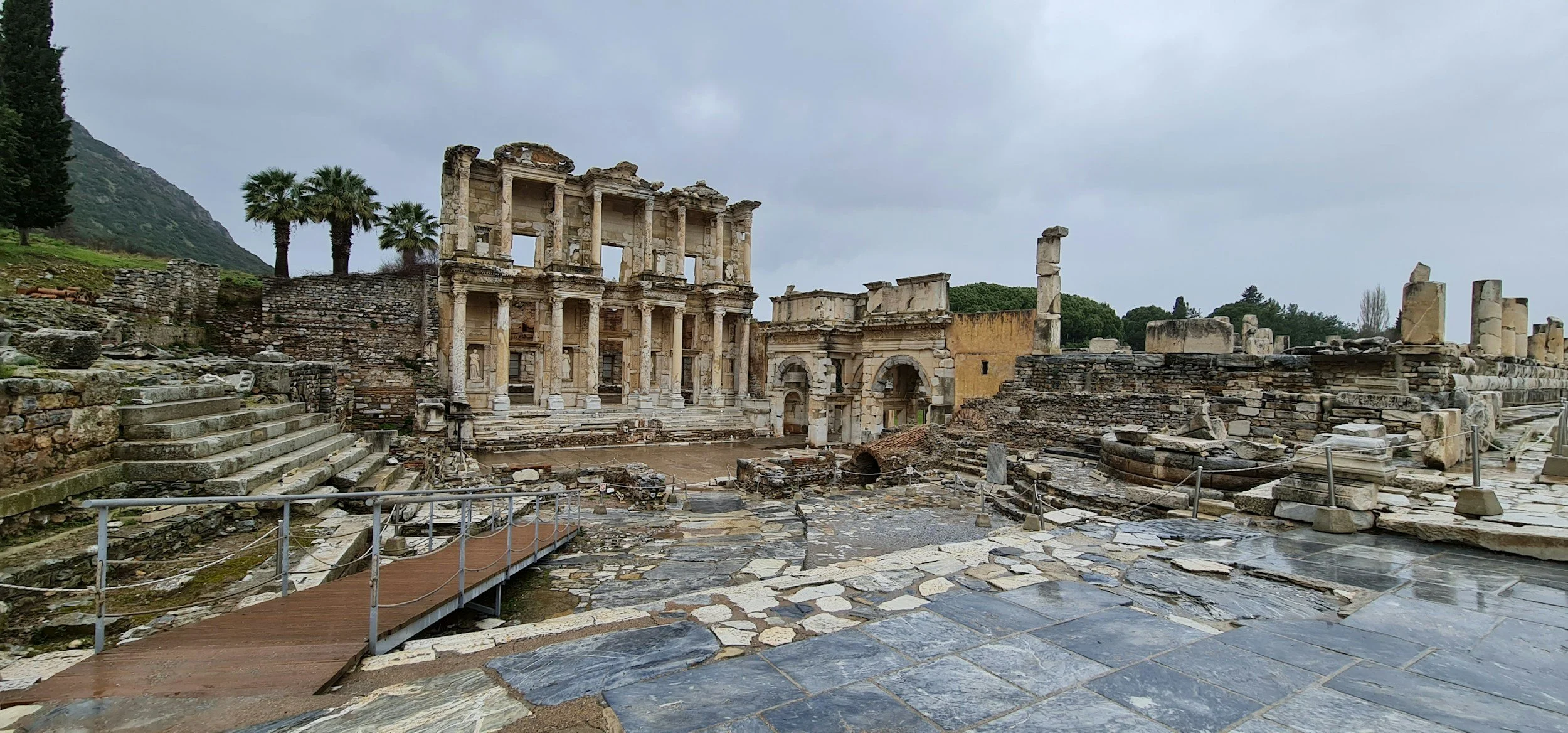
Ancient Ephesus was a bustling and prominent city, not unlike New York City today, one that never slept. It was the center of cultural, philosophical and commercial wealth. Greek philosophers debated often at the schools of philosophy located in the city. Pagan worship held a huge influence over Ephesus with worship of the goddess Artemis being most notable. A temple, considered one of the seven wonders of the ancient world, was constructed for her worship and trade of silver idols of Artemis’ likeness.
In addition to the Greek influence and pagan worship, a growing Christian influence often ran afoul of the legalism of Judaic law. All these factions had infiltrated the church at Ephesus, with teachers proclaiming false doctrines and church members arguing and debating these ideas amongst themselves. This had caused them to take their eyes off the goal of love for one another and for winning souls to Christ. (Paul uses the terms myths and genealogies to describe the false teachings.)
Timothy was likely in his mid to late 30’s, and still considered a youth by Jewish standards, when Paul sent him to stabilize the church at Ephesus. By this time, Paul had spent the last 20 years mentoring Timothy and considered him a son in the faith, if not like a biological son. Paul had compassion for Timothy’s youth but because of past prophesies, he knew that God had equipped Timothy with spiritual gifts necessary to fight against the strong personalities and false doctrines infiltrating the church.
Paul wrote that the priority before entering worship was prayer. He wrote both men and women should come before the Lord with a pure heart and good conscience. He presented several types of prayers that should be used to pray for leaders and all people that included prayers of supplication, intercessory prayer and those offering thanksgiving. God wanted all people, including kings and those in authority, to be saved.
Since many had lost their pure heart, good conscience and sincere faith, some in the church at Ephesus had shipwrecked their faith (a likely analogy to what Paul experienced during the shipwreck in Malta). Paul’s key message in his letter to Timothy and the church at Ephesus was to regain their love for God and one another, to have a pure heart, a good conscience and a sincere faith. Paul declared that God wanted all people to be saved and it was the church (the people) that would be how the world would hear this good news and see it lived out in the lives of believers.
Paul gave 3 actions that the church could take to deal with false doctrines:
Stay at the task of fighting the good fight of faith by pursuing righteous, godliness, faith, love, steadfastness, gentleness as described in chapter 1 Timothy 6:11.
Communicate the truth by teaching scriptural truth of God’s saving grace and not a message that “tickled the ears”, diluted the gospel or conformed to the world.
Concentrate on the goal of true love for one another and servanthood to others to bring lost souls to Christ.
The following quote is apropos: “When church folks lose their moral backbone, society doesn’t become more loving. It becomes more lawless. And once the church looks and sounds like the world, the world has no reason to let it be seen or to speak at all.” Wayne E. Daniels, Jr., Archbishop, American Orthodox Catholic Church
May God give us the grace to cherish and preserve the gospel by which we have been saved.

Spiritual Gifts
Summary for Spiritual Gifts lesson
I. 1 Corinthians 15:3-4 (The GOSPEL in two verses!)
II. 1 Corinthians 13 (The LOVE Chapter)
III. We are sealed with the Holy Spirit:
Ephesians 1:13-14 - We are sealed with the Holy Spirit when we believe in Christ.
2 Corinthians 1:21-22 - God establishes us and anoints us, sealing us with the Spirit.
Romans 8:9 - Anyone who does not have the Spirit of Christ does not belong to Him.
Galatians 4:6 - God sends the Spirit of His Son into our hearts, affirming our identity as His children.
John 14:17 - The Spirit dwells with us and will be in us, confirming our relationship with God.
1 John 3:24 - The Spirit He gave us confirms that we abide in Him and He in us.
IV. Gifts of the Holy Spirit
A. Administration
As an administrator you are a take-charge person who jumps in and starts giving orders when no one is in charge. You may lean toward organizing things, events or programs, OR toward organizing people, emphasizing personal relationships and leadership responsibilities.
B. Encouragement (Exhortation)
You have the Spirit-given capacity and desire to serve God by motivating others to action by urging them to pursue a course of conduct. You are enthusiastic and talkative and enjoy encouraging others.
C. Evangelism
The evangelist can either be a preacher who stands before a crowd, imploring them to be saved, or perhaps an individual sitting in a living room or on a plane, trying to persuade someone to accept Christ.
D. Giving
As a giver you have the Spirit-given capacity and desire to serve God by giving of your material resources, far beyond the tithe, to further the work of God. You have a strong desire to meet the financial needs of your fellow Christians and church members.
As a giver you probably feel that the best way you can give of yourself is to give of your material gain for the work of God. You give without public recognition and usually do not want people to know who you are nor how much is given. You disapprove of anyone who gives for the wrong motive. Your motive is to further the work of God and meet real needs, not to show off or get something in return.
E. Mercy
Closely linked to the gift of encouragement, the gift of mercy is obvious in those who are compassionate toward others and desire to lessen their suffering in a kind and cheerful manner.
F. Prophecy
The gift of prophecy does not mean you are supposed to have visions of the future. It means you are a "forthteller," telling or "speaking forth" the mind of God: boldly preaching, speaking, and teaching God's Word. You are very discerning; one who points out sin with the goal of making people aware of sin in their lives so they will repent.
G. Serving
As a server you have the Spirit-given capacity and desire to serve God by rendering practical help in both physical and spiritual matters. You enjoy meeting the practical needs of your fellow Christians and the church.
The gift of serving is not the gift God gives you when you cannot do anything else. It is spiritual in nature and as important as any gift in the church. Never think it is anything less; it only becomes less if you do not use it as God intended.
As a server you are the person who is willing to do a million and one necessary tasks in the church.
H. Shepherding
As a gifted shepherd, you have the Spirit-given capacity and desire to serve God by overseeing, training, and caring for the needs of a group of Christians. You are usually very patient, people-centered, and willing to spend time in prayer for others.
I. Teaching
As a teacher you are one who communicates knowledge, guides, makes known or relays facts. You are likely more in-depth than the average Sunday school teacher. You have the Spirit-given capacity and desire to serve God by making clear the truth of God's Word with accuracy. The material must be simple so students can understand it, and it must be practical.
V. Fruit of the Spirit
A. LOVE is the foundation, emphasizing selfless care for others.
B. JOY reflects a deep-seated happiness that transcends circumstances.
C. PEACE signifies inner tranquility and harmony with others.
D. PATIENCE encourages tolerance and endurance in difficult situations.
E. KINDNESS involves being considerate and compassion
towards others.
F. GOODNESS represents moral integrity and a desire to do good.
G. FAITHFULNESS highlights loyalty and reliability in
relationships.
H. GENTLENESS promotes humility and a soft approach in
interactions.
I. SELF-CONTROL empowers individuals to manage their impulses and desires.
Bible passages used in lesson on Spiritual Gifts, 4-16-26:
Matthew 25:14-30 (parable of talents)
1 Corinthians 12:4-8 – Spiritual Gifts
Romans 12:6-8 (gifts)
Ephesians 4:11 (gifts)
1 Peter 4:10-11 (gifts)
***********************************************************************************************
We had a guest singer today – Lauren Jollay Gray (Kathy Jollay’s daughter)
Discussed John 17:3, NIV
3 Now this is eternal life: that they know You, the only true GOD, and Jesus Christ, whom you have sent.
"Untitled Hymn (Come To Jesus)"
By Chris Rice
Weak and wounded sinner
Lost and left to die
O, raise your head, for love is passing by
Come to Jesus
Come to Jesus
Come to Jesus and live!
Now your burden's lifted
And carried far away
And precious blood has washed away the stain... so
Sing to Jesus
Sing to Jesus
Sing to Jesus and live!
And like a newborn baby
Don't be afraid to crawl
And remember when you walk, sometimes we fall... so
Fall on Jesus
Fall on Jesus
Fall on Jesus and live!
Sometimes the way is lonely
And steep and filled with pain
So if your sky is dark and pours the rain... then
Cry to Jesus
Cry to Jesus
Cry to Jesus and live!
O, and when the love spills over
And music fills the night
And when you can't contain your joy inside... then
Dance for Jesus
Dance for Jesus
Dance for Jesus and live!
And with your final heartbeat
Kiss the world goodbye
Then go in peace and laugh on glory's side... and
Fly to Jesus
Fly to Jesus
Fly to Jesus and live!

Women of the Bible
As we journeyed through Bible verses this past week about women’s roles in the Bible, we discovered that women are powerful figures in God’s story. From leaders and caregivers to advocates for justice, prayer warriors, and faithful witnesses, their contributions are invaluable. Let’s be inspired by these incredible women who have gone before us.
Women of the Bible
As we journeyed through Bible verses this past week about women’s roles in the Bible, we discovered that women are powerful figures in God’s story. From leaders and caregivers to advocates for justice, prayer warriors, and faithful witnesses, their contributions are invaluable. Let’s be inspired by these incredible women who have gone before us. And, let our hearts be open to God’s calling, fully participating in His great purpose.
I hope you all enjoyed researching Bible verses and sharing information about the Women in the Bible for which our Small Group Table are named. You all did a great job!
Elizabeth – Luke 1:25,45 “The Lord has done this for me,” she said. “In these days He has shown me favor and taken away my disgrace among the people”. Blessed is she who has believed that the Lord would fulfill his promises to her!”
Priscilla – Acts 18:26 He began to speak boldly in the synagogue. When Priscilla and Aquila heard him, they invited him to their home and explained to him the way of God more adequately.
Rachel - Genesis 30:22-23 Then God remembered Rachel; He listened to her and enabled her to conceive. She became pregnant and gave birth to a son and said, “God has taken away my disgrace.”
Hannah - 1 Samuel 1:10 - 11 In her deep anguish Hannah prayed to the Lord, weeping bitterly. And she made a vow, saying, “Lord Almighty, if you will only look on your servant’s misery and remember me, and not forget your servant but give her a son, then I will give him to the Lord for all of the days of his life, and no razor will ever be used on his head.
Anna the Prophetess - Luke 2:37 and then there was a widow until she was eighty-four. She never left the temple but worshipped night and day, fasting and praying.
Mary, the mother of Jesus - Luke 1:38 “I am the Lord’s servant,” Mary answered. “May your word to me be fulfilled.” The angel left her.
Esther – Esther 4:14 “For if you remain silent at this time, relief and deliverance for the Jews will arise from another place, but you and your father’s family will perish. And who knows but that you have come to your royal position for such a time as this?”
Sarah – Hebrews 11:11 And by faith even Sarah, who was past childbearing age, was enabled to bear children because she considered him faithful who had made the promise.
Looking up answers to the Trivia questions was another good way to get us into the Bible. I learned a lot and hope you did too! If you missed and would like to take on the Trivia challenge, let me know. I’ll be glad to send you a copy of the questions via email.

My God will Provide
My God will Provide
The story begins with a strange command from God to Abraham, instructing him to offer his “son of promise,” Isaac, as a burnt offering. Early the next morning, Abraham packs wood and a knife, and he and Isaac travel to Moriah, the place God had specified. As they near the site, Isaac questions Abraham concerning the intended offering: “Where is the lamb?” With great faith and foresight, Abraham responds, “God himself will provide the lamb for the burnt offering, my son” (Genesis 22:1-8). The New Testament tells us that Abraham believed God would raise Isaac from the dead (Hebrews 11:19).
Upon reaching the place God had chosen, Abraham demonstrates his faith and obedience by building an altar, binding Isaac, and placing him on the wood. Before Abraham can finish the offering, the Angel of the Lord calls to him from heaven, and Isaac’s life is spared. Then, “Abraham looked up and there in a thicket he saw a ram caught by its horns. He went over and took the ram and sacrificed it as a burnt offering instead of his son” (Genesis 22:13). Abraham names the place “Jehovah-Jireh” because of God’s gracious provision of a substitute for Isaac. Immediately afterwards, God reconfirms His covenant with Abraham (v 17-18). Centuries later, King Solomon would build the temple in the same location (2 Chronicles 3:1).
The account of Abraham on Mt. Moriah thus becomes more than a dramatic illustration of faith and obedience. It is a presentation of the Lord’s eternal grace, continual provision, and all-encompassing wisdom. Jehovah-Jireh is not “The LORD Did Provide,” but “The LORD Will Provide.” In other words, the name does not simply memorialize a past event; it anticipates a future action.
Likewise, the statement “on the mountain of the LORD it will be provided” (verse 14) refers to more than Mt. Moriah—it also refers to a hill called Calvary, where God “did not spare his own Son, but gave him up for us all” (Romans 8:32). Abraham’s faith-filled statement that “God himself will provide the lamb” is a companion to John the Baptist’s exclamation, “Look, the Lamb of God, who takes away the sin of the world!” (John 1:29).
Jehovah-Jireh provided a sacrifice to save Isaac, and that action was a foreshadowing of the provision of His Son for the salvation of the world.

Old Testament Prophecies Fulfilled during Holy Week
Old Testament Prophecies Fulfilled during Holy Week
In the Fall, I presented a talk on Messianic prophecies fulfilled by the birth of our Lord Jesus. Remember, a prophet is someone who God uses to deliver his words, instructions, or, in this case, predictions of things to come. Prophets such as Isaiah, Jeremiah, Zechariah, and David, in the Psalms, wrote words inspired by God 700-1000 years before Jesus walked the earth. Then, as these prophecies were fulfilled, the New Testament writers noted their fulfillment.
According to biblical experts, Jesus fulfilled hundreds (300) of prophecies during his life. On March 27, we discussed twelve prophecies fulfilled during Holy Week and Jesus' resurrection. I hope you will use this list as a review for Easter.
1. People in Jerusalem will celebrate when Jesus arrives on a donkey.
Old Testament Scripture: Zechariah 9:9
Rejoice greatly, Daughter Zion! Shout, Daughter Jerusalem! See, your king comes to you, righteous and victorious, lowly and riding on a donkey, on a colt, the foal of a donkey.
Fulfillment in Jesus:Matthew 21:7-9
The disciples brought the donkey and the colt and placed their cloaks on them for Jesus to sit on. A very large crowd spread their cloaks on the road, while others cut branches from the trees and spread them on the road. The crowds that went ahead of him and those that followed shouted, “Hosanna to the Son of David!”
2. Jesus will be betrayed for 30 pieces of silver.
Old Testament Scripture: Zechariah 11:13b
So I took the thirty pieces of silver and threw them to the potter at the house of the LORD.
Fulfillment in Jesus:Matthew 26:14, 15
Then one of the Twelve – the one called Judas Iscariot – went to the chief priests and asked, “What are you willing to give me if I deliver him over to you?” So they counted out for him 30 pieces of silver.”
3. Jesus will be quiet before his accusers.
Old Testament Scripture: Isaiah 53:7
He was oppressed and afflicted, yet he did not open his mouth; he was led like a lamb to the slaughter, and as a sheep before its shearers is silent, so he did not open his mouth.
Fulfillment in Jesus: Matthew 27:14
But Jesus made no reply, not even to a single charge—to the great amazement of the governor.
4. Jesus will be rejected.
Old Testament Scripture: Isaiah 53:3
He was despised and rejected by mankind, a man of suffering and familiar with pain.
Fulfillment in Jesus: Mark 15:12-13
What shall I do, then, with the one you call the king of the Jews? Pilate asked them. “Crucify him!” they shouted.
5. Jesus will be mocked and beaten.
Old Testament Scripture: Isaiah 50:6
I offered my back to those who beat me, my cheeks to those who pulled out my beard; I did not hide my face from mocking and spitting.
Fulfillment in Jesus: Matthew 27:27-30
Then the governor’s soldiers took Jesus into the Praetorium and gathered the whole company of soldiers around him. They stripped him and put a scarlet robe on him, and then twisted together a crown of thorns and set it on his head. They put a staff in his right hand. Then they knelt in front of him and mocked him. “Hail, king of the Jews!” they said. They spit on him, and took the staff and beat him on the head again and again.
6. Jesus will be among criminals at his death.
Old Testament Scripture: Isaiah 52:12b
…he poured out his life unto death and was numbered with the transgressors.
Fulfillment in Jesus:Mark 15:27
They crucified two rebels with him, one on his right and one on his left.
7. As the psalmist did, Jesus will commit his spirit into God’s hands.
Old Testament Scripture: Psalm 31:5
Into your hands I commit my spirit, deliver me, LORD, my faithful God.
Fulfillment in Jesus:Luke 23:46
Jesus called out with a loud voice, “Father, into your hands I commit my spirit.” When he had said this, he breathed his last.
8. Like the Passover Lamb, none of Jesus’ bones will be broken.
Old Testament Scripture:
Exodus 12:46 It must be eaten inside the house; take none of the meat outside the house. Do not break any of the bones.
Psalm 34:20 He protects all his bones, not one of them will be broken.
Fulfillment in Jesus:John 19:31-33
Because the Jewish leaders did not want the bodies left on the crosses during the Sabbath, they asked Pilate to have the legs broken and the bodies taken down. The soldiers, therefore, came and broke the legs of the first man who had been crucified with Jesus, and then those of the other. But when they came to Jesus and found that he was already dead, they did not break his legs.
9. Jesus will be pierced.
Old Testament Scripture:
Psalm 22:16 ..they pierce my hands and my feet.
Zechariah 12:10 And I will pour out on the house of David and the inhabitants of Jerusalem a spirit of grace and supplication. They will look on me, the one they have pierced.
Fulfillment in Jesus:John 19:34
Instead, one of the soldiers pierced Jesus’ side with a spear, bringing a sudden flow of blood and water.
10. Jesus will die for the sins of people.
Old Testament Scripture:
Isaiah 53:5b The punishment that brought us peace was on him, and by his wounds we are healed.
Isaiah 53:8b For he was cut off from the land of the living; for the transgression of my people he was punished.
Fulfillment in Jesus:
Matthew 27:51 And when Jesus had cried out again in a loud voice, he gave up his spirit.
1 Peter 2:24a He himself bore our sins in his body on the cross, so that we might die to sins and live for righteousness.
11. Jesus will be buried with the rich.
Old Testament Scripture: Isaiah 53:9a
He was assigned a grave with the wicked, and with the rich in his death.
Fulfillment in Jesus:Matthew 27:57-60
As evening approached, there came a rich man from Arimathea, named Joseph, who had himself become a disciple of Jesus. Going to Pilate, he asked for Jesus’ body, and Pilate ordered that it be given to him. Joseph took the body, wrapped it in a clean linen cloth, and placed it in his own tomb that he had cut out of the rock. He rolled a big stone in front of the entrance to the tomb and went away.
12. Jesus will be resurrected.
Old Testament Scripture:
Isaiah 53:11a After he has suffered, he will see the light of life and be satisfied.
Psalm 16:10 because you will not abandon me to the realm of the dead, nor will you let your faithful one see decay.
Hosea 6:2b On the third day he will restore us, that we may live in his presence.
Fulfillment in Jesus:Luke 24:4-6
While they were wondering about this, suddenly two men in clothes that gleamed like lightning stood beside them. In their fright, the women bowed down with their faces to the ground, but the men said to them, “Why do you look for the living among the dead? He is not here; he has RISEN!
Further research and thoughts related to the questions during our time together on March 26 about whether or not Jesus was separated from God on the cross
1) First, we must understand that sin separates us from God. The only way we can be right with God is through faith in Jesus. John 3:16,
John 14:5-6 NIV: 5 Thomas said to him, “Lord, we don’t know where you are going, so how can we know the way?” 6 Jesus answered, “I am the way and the truth and the life. No one comes to the Father except through me.
2) Jesus, being fully human and fully God, had a role to play to reunite humanity with God. In playing this role, he took on our sins on the cross, died, was resurrected, and returned to heaven to sit at God's right hand.
2 Corinthians 5:21 NIV: God made him who had no sin to be sin for us, so that in him we might become the righteousness of God.
3) On the cross, there was a point where it became dark for three hours, eventually the earth shook, and the veil in the temple (separating regular people from where God resided) tore, and Jesus died.
Luke 23:44-46 NIV - The Death of Jesus
44 It was now about noon, and darkness came over the whole land until three in the afternoon, 45 for the sun stopped shining. And the curtain of the temple was torn in two. 46 Jesus called out with a loud voice, “Father, into your hands I commit my spirit.”[a] When he had said this, he breathed his last.
Mark 14:33-34 NIV: At noon, darkness came over the whole land until three in the afternoon. 34 And at three in the afternoon Jesus cried out in a loud voice, “Eloi, Eloi, lema sabachthani?” (which means “My God, my God, why have you forsaken me?”)
Matthew 27:50-54 NIV: 50 And when Jesus had cried out again in a loud voice, he gave up his spirit. 51 At that moment the curtain of the temple was torn in two from top to bottom. The earth shook, the rocks split 52 and the tombs broke open. The bodies of many holy people who had died were raised to life. 53 They came out of the tombs after Jesus’ resurrection and[a] went into the holy city and appeared to many people. 54 When the centurion and those with him who were guarding Jesus saw the earthquake and all that had happened, they were terrified, and exclaimed, “Surely he was the Son of God!”
Perhaps "separated" is not the right word, because Jesus was still God himself. We use that word because we know that sin separates us from God, and God cannot be around sin. Jesus had a role to play, and he knew what was to happen, but still experienced human emotions. Remembering that God would not change the sacrifice because of the world's sin, Jesus knew it needed to happen in that way. Perhaps he had a moment when he knew God would not intervene, and things must play out. His words, "My God, my God, why have you forsaken me?" confuse us. Some pastors feel that perhaps that was a cry of agony, yet a cry of obedience and faith.
As believers who are "saved," we have those moments when God lets things play out. We are not separated from God because we have faith in Jesus. God does not abandon us, and we must trust that God is almighty. The Holy Spirit lives within us and does not leave no matter what may happen. We may be able to ask about these moments in heaven. Maybe it all makes sense when we see Jesus face-to-face.
I think both viewpoints are correct - Jesus was fully God and fully human and perhaps there was a moment when the sins of all of us were released as part of God's plan for his son's sacrifice that could be called separation.
Either way, I think we have honored God by wrestling with this, discussing it, praying about it, and most importantly loving each other through it.
Becky

“GOD, why are you killing me?”
“GOD, why are you killing me?”
(Lesson on 3-19-26, Taken from 2 Corinthians 12:1-10)
Pick a quiet time when you are feeling prayerful to listen to this song:
“His Strength is Perfect”, sung by Steven Curtis Chapman https://youtu.be/FbjxJnk2XTU?si=_zAB6CplNAXstjUs
*********************************************************************************************
Causes of trials & adversities:
Sin - we reap what we sow
Galatians 6:7 – sows will reap
(Isaiah 59:1-2, separated you from GOD)
The Devil - Job 1:12, NLT
GOD - To keep me from exalting myself
2 Corinthians 12:1-4 (visions)
2 Corinthians 12:7-10, The Message
Hebrews 13:5, “I will never leave you nor forsake you.”
Faith under pressure: James 1:2-5
I will be with you - Isaiah 43:2, (ESV)
Crown of life - James 1:12, (Living Bible)
John Piper says,
“Weakness does not mean glory for JESUS, but gladness in our weakness means glory to GOD.”
Andy Stanley’s prayer: “Heavenly Father, use this till You choose to remove this.”
Emma’s daily prayer before bed: Psalm 91 (My “other mother” who will be 94 this coming August – lives in Griffin, GA)
Tony Evans’ contribution: (The title of our lesson was taken from a series by Tony Evans.)
Greek word skolops (σκόλοψ) for "thorn," - a sharp stake, splinter, or spike, rather than a small briar.
Conveys intense, agonizing pain or impalement, suggesting a severe, ongoing torment meant to hinder him, often described as a "messenger of Satan" intended to keep him humble. For when I am weak, I am strong.
Would you not have a thorn and have no power, or would you accept a thorn and have My great power? His son, Anthony had a severe asthma attack and needed a shot of Epinephrine. Anthony asked his daddy, “Why are you helping him hurt me? In the pain of the needle, would be the power to heal Anthony.
John 11:1-3 – Lazarus story
GOD uses and allows sickness to glorify GOD. If you believe, you will see the glory of GOD!
Psalm 116 (I like The Message for this Scripture) reminds me of Jessica.
(My friend who became a quadriplegic because of a car accident. She lived her life for Christ!)
********************************************************************************************************
I had never heard this song before, but it helped to summarize this lesson.
If you have trouble hearing this wonderful song, sung by H. Henry, there is a female rendition on Spotify, sung by Angie Zachary.
“Three Times I Asked You”
(words by Bryan Jeffrey Leech)
singer, Huhtulag Henry

The Story of Hagar
Hagar's story beginning in Genesis 16:1 highlights themes of survival, faith, and divine providence. She is recognized not only as the mother of Ishmael but also as a symbol of God's care for the marginalized. Her narrative raises important discussions regarding motherhood, the complexities of family dynamics, and the intersection of faith and hardship.
The theme of the story of Hagar is
“Seeing the unseen and trusting in God’s timing”
Now Sarai, Abram’s wife, had borne him no children. But she had an Egyptian slave named Hagar; so, she said to Abram, “The Lord has kept me from having children. Go, sleep with my slave; perhaps I can build a family through her.”
Abram agreed to what Sarai said. So after Abram had been living in Canaan ten years, Sarai his wife took her Egyptian slave Hagar and gave her to her husband to be his wife. He slept with Hagar, and she conceived.
Were Sarai and Abram trusting God’s timing?
Is this going to end well for Hagar?
When she knew she was pregnant, she began to despise her mistress. Then Sarai said to Abram, “You are responsible for the wrong I am suffering. I put my slave in your arms, and now that she knows she is pregnant, she despises me. May the Lord judge between you and me.”
“Your slave is in your hands,” Abram said. “Do with her whatever you think best.” Then Sarai mistreated Hagar; so she fled from her.
The angel of the Lord found Hagar near a spring in the desert; it was the spring that is beside the road to Shur. And he said, “Hagar, slave of Sarai, where have you come from, and where are you going?”
“I’m running away from my mistress Sarai,” she answered.
Then the angel of the Lord told her, “Go back to your mistress and submit to her.” The angel added, “I will increase your descendants so much that they will be too numerous to count.”
The angel of the Lord also said to her:
“You are now pregnant
and you will give birth to a son.
You shall name him Ishmael,
for the Lord has heard of your misery.
He will be a wild donkey of a man;
his hand will be against everyone
and everyone’s hand against him,
and he will live in hostility
toward all his brothers.”
(It is important to note that this is the first appearance of the angel of the LORD.)
She gave this name to the Lord who spoke to her: “You are the God who sees me,” for she said, “I have now seen the One who sees me.” She called the Lord El Roi. (Hagar’s response reflects her recognition of God’s presence and care.)
So Hagar bore Abram a son, and Abram gave the name Ishmael to the son she had borne. Abram was eighty-six years old when Hagar bore him Ishmael.
When Abraham was 99 he and Sarah were again told by the Lord that Sarah would have a son who would be the father of nations. As unbelievable as it sounded Sarah conceived Isaac and she asked Abraham to send Hagar and Ishmael away. He sent them to the desert.
They were met by the Lord’s angel as Hagar thought she and Ishmael were about to die. The Lord showed them sustenance and safety and again told Hagar he would make Ishmael the father of many descendants.
What would this story look like if Sarah and Abraham had believed God would and could do what he said?
USE ME
Summary of USE ME from March 5
Have you ever felt God nudging you to do something….and your first thought was,
‘Surely not me’
BEING CALLED TO SERVE
The call to serve is an important theme in the Bible (1 Peter 4:10, Mark 10:45, and Jeremiah 29:11 are just a few).
The Bible is filled with examples of those who were called to serve in various ways who had differing reactions.
Read about Moses and his reluctant response in Exodus 3:1-10, Exodus 4:1-8, and Exodus 4:12.
Read about Jonah’s story beginning in Jonah 1:1-3. He literally ran and hid from God.
Esther’s call and courageous response to God with no hesitation are found in Esther 4:13-17
Mary, the mother of Jesus with “why me”? doubts accepted God’s call with obedience in spite of the personal hardships she knew she would face. Luke 1:38
Peter was called two times by God through His son, Jesus. It is significant that Jesus called Peter both times at the Sea of Galilee. Once as Jesus’s ministry was beginning and then after His death and resurrection. These two beautiful stories are found in Luke and John (Luke 5:1-11 and John 21). It is also important to note that Jesus travelled 80 miles in his resurrected body to call Peter a second time. What a meaningful exchange Jesus and Peter had in verses John 21:15-17. Jesus was telling Peter that his calling was not over. Jesus was in essence saying, “I have more for you to do”. Both times Peter responded with faith.
RECOGNIZING THE CALL
We may not see a burning bush in our backyards one day, but we do receive our own personal callings in various ways:
God communicates to us through SCRIPTURE;
God responds to us through PRAYER and;
We receive callings from OTHER PEOPLE.
RESPONDING TO THE CALL
Recognize/embrace the call and be ready to respond. This may sometimes mean stepping out of your comfort zone casting aside your doubts and fears and maybe even other activities WE have made OUR priorities. This is not always easy – this is when trust must step in. God will provide guidance and encouragement.
NEXT STEPS
Identify your gifts and talents - Read Romans 12:3-8 as you sit quietly to access your skills. Don’t be shy – we are all good at something! Join us on April 16 when Kitty Keadle will explore this further.
Pray – Be patient, be quiet, and listen.
Ask yourself, “what does serving mean to me?”
Seek out ways to serve. Ask others what is needed.
Encourage others who are serving.
Remember, God call us NOT because of who we are, but because of who HE is.
When He calls, our response should be simple
USE ME!